Ask most hybrid owners where their battery gets its air and you'll get a blank look. Fair enough. It's not something the dealer points out when you drive off the lot.
But your hybrid battery has to breathe. Every time it charges and discharges, it makes heat. A small fan pulls cabin air across the pack to carry that heat away. That air comes in through a vent, usually somewhere near the back seat.
That vent is easy to cover, easy to clog and easy to forget. We see it in the shop more often than you'd think.
Why Heat Matters So Much
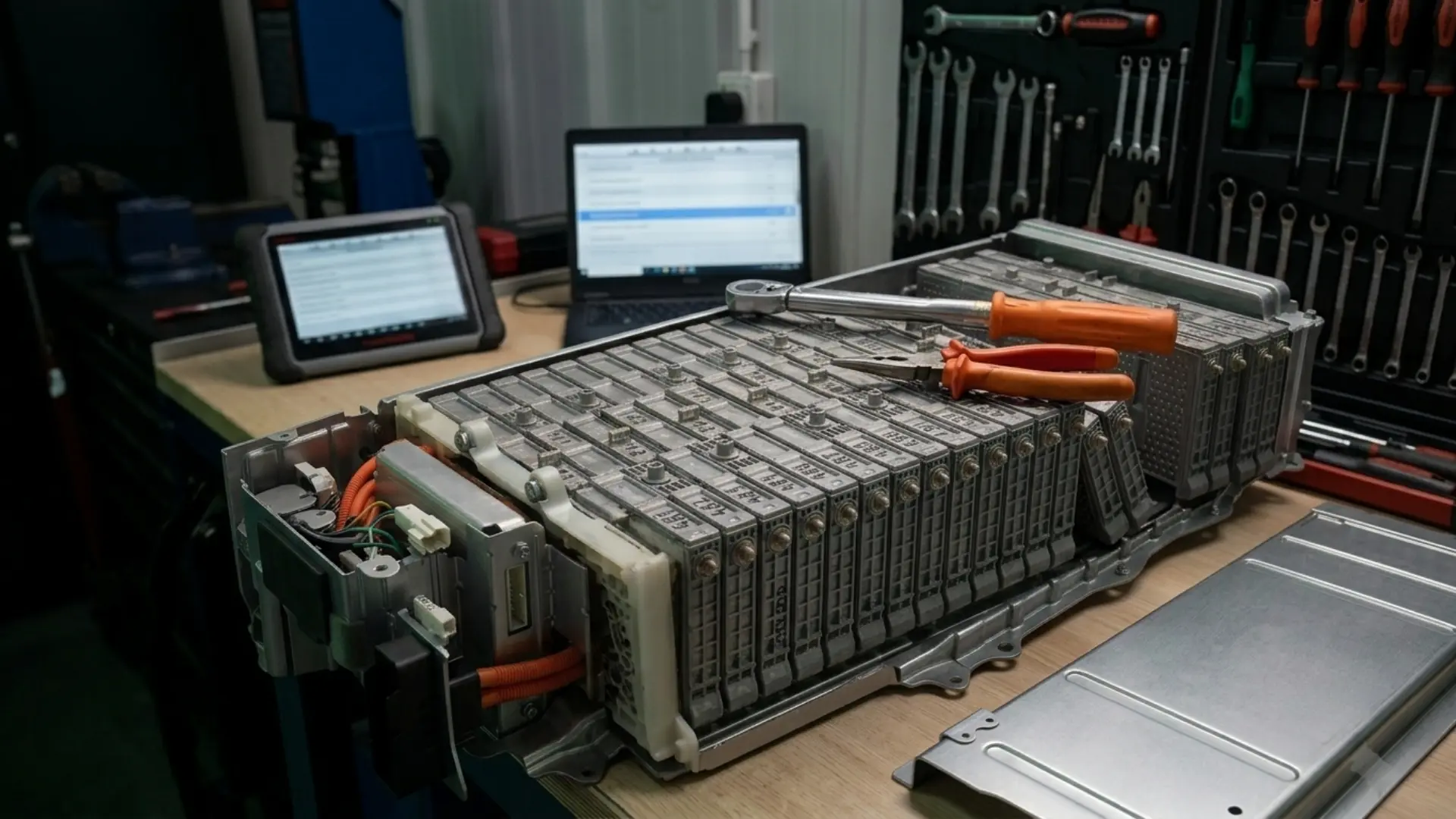
Hybrid batteries are built from dozens of cells working as a team. Heat is hard on all of them. It's even harder when one corner of the pack runs warmer than the rest, because those cells age faster and the whole pack falls out of balance.
A pack that runs hot day after day doesn't usually fail in one dramatic moment. It fades. Fuel economy slips. The charge gauge starts swinging. Eventually a warning light shows up and the conversation turns expensive.
Good airflow won't make a battery last forever. Poor airflow can absolutely shorten its life.
Where the Vent Lives
On most Toyota and Lexus hybrids, the intake is a small plastic grille in the rear seat area, often on the passenger side. Depending on the model, it can sit beside the seat back, low near the floor, or under the edge of the seat cushion. It looks like a speaker cover, which is part of why nobody notices it.
The quickest way to find yours is the owner's manual. Look in the index under hybrid battery or traction battery air intake. It will show the exact spot and usually a warning not to block it.
Some newer models also have a small filter behind the grille. If yours does, the manual will tell you how to check it.
The Usual Suspects
Here's what we find blocking vents, in roughly the order we find it.
Pet hair. This is the big one. Dogs love the back seat, and the fan is doing exactly what it was designed to do, pulling air in. Fur goes with it. Over months it mats into a felt-like layer across the grille and inside the duct. A long-haired dog that rides along every weekend can cover a vent faster than you'd believe.
Blankets and seat covers. Pet hammocks and full seat covers are great for keeping upholstery clean. Some of them drape right over the intake.
Bags and boxes. A gym bag, a grocery tote, a box of files wedged against the seat. If it sits on the vent every day, the battery is breathing through it every day.
Child seats. Depending on the car, a car seat base can sit tight against the intake on the passenger side.
Plain old dust. Cars that see dusty roads or construction sites pick it up even without a pet on board.
What a Blocked Vent Feels Like
The car won't send you a message that says the vent is blocked. You have to read the signs.
- The battery fan runs loud and often, even on mild days
- The fan noise is noticeable from the back seat at stoplights
- Fuel economy drops without a clear reason
- The gas engine runs more than it used to
- The charge gauge climbs and drops faster than normal
Any of these can have other causes, so treat them as a reason to look, not a diagnosis. If you'd like to narrow it down, our Symptom Checker is a good starting point. It's for reference only and isn't a diagnosis.
If a warning light is already on, look up the code in our Error Code Library. Cooling fan faults often show up as codes in the P0A81 to P0A85 range.
The Two-Minute Driveway Check
You don't need tools for this. You just need a flashlight.
- Find the grille. Use the manual if you're not sure where it is.
- Clear the area. Move bags, blankets and anything else sitting against it.
- Look closely. Shine the light through the slots. You should see open space behind it, not a gray or fuzzy layer.
- Vacuum the surface. A brush attachment on a regular vacuum lifts hair and dust off the grille without pushing it deeper.
- Listen. With the car on and the area clear, the fan should sound steady, not strained.
That's it. Do it every few months, more often if a dog rides with you.
One thing we'd ask you not to do is take the vent and duct apart yourself. The fan and the battery sit right next to high-voltage parts. Cleaning the surface is safe and easy. Going deeper belongs on a lift with the right training.
When It's Gone Past a Quick Clean
Sometimes the grille looks clean but the problem is further in. Hair and dust collect on the fan blades and inside the duct where you can't see or reach them. The fan works harder, moves less air and eventually gets noisy or quits.
At that point our certified technicians can remove and clean the fan and duct properly, check the fan's operation and look at how evenly the pack is holding temperature. Heat and moisture are also hard on the busbars, the metal connectors that tie the modules together. If we see buildup there, busbar cleaning is often the next sensible step.
A full hybrid diagnostic tells you what's actually going on. Sometimes the answer is a fan cleaning and nothing else. We'll tell you that honestly.
Warm Days Make It Worse
Inland heat waves, cars parked in full sun and stop-and-go traffic all push battery temperatures up. A clear vent matters most on exactly the days your car is working hardest.
A few simple habits help:
- Park in shade or a garage when you can
- Run the AC on hot days, since the battery pulls its cooling air from the cabin
- Keep the rear seat area clear, especially in summer
For more everyday habits that protect your pack, see How to Make Your Hybrid Battery Last Longer.
Your dog can keep the back seat. Just give the battery some room to breathe. If your fan sounds like it's working overtime, or you'd rather have someone take a proper look, our team is happy to help.
Hybrid Battery Trouble?
Get an honest diagnosis from a Dr. Prius Certified specialist. Same-day service available, warranty on every job, mobile service across the Bay Area.