Over 10,000 hybrid batteries serviced since 2017. These are the customers who trusted us — and came back.
Loading reviews...
The Part Most People Never See
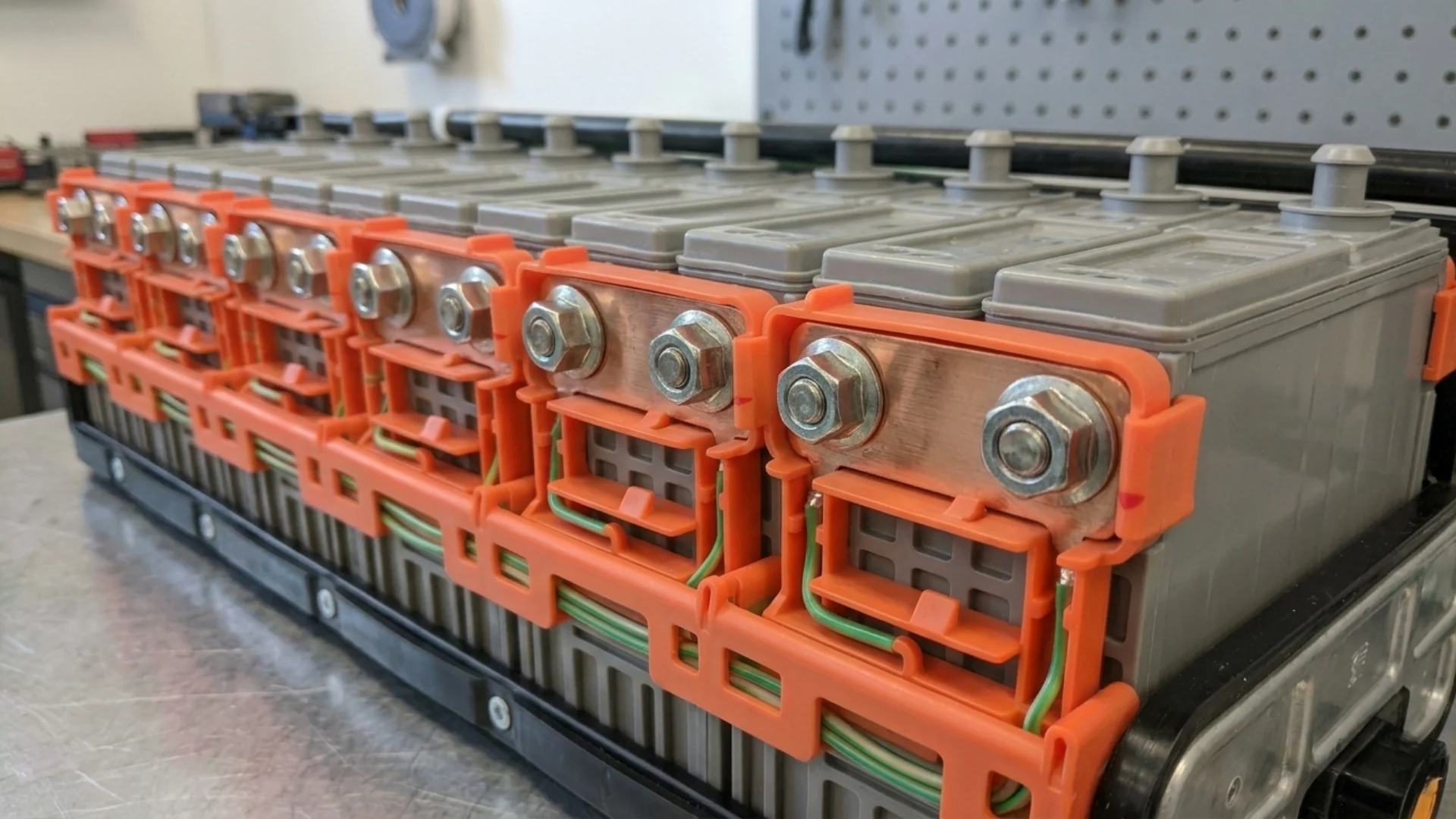
Inside every hybrid battery pack, modules and cells are linked by copper busbars — flat strips or shaped pieces of copper that carry current from one section of the pack to the next. They are the conductive backbone of the whole system. Every amp the pack delivers and every amp regenerative braking pushes back into it crosses these connections.
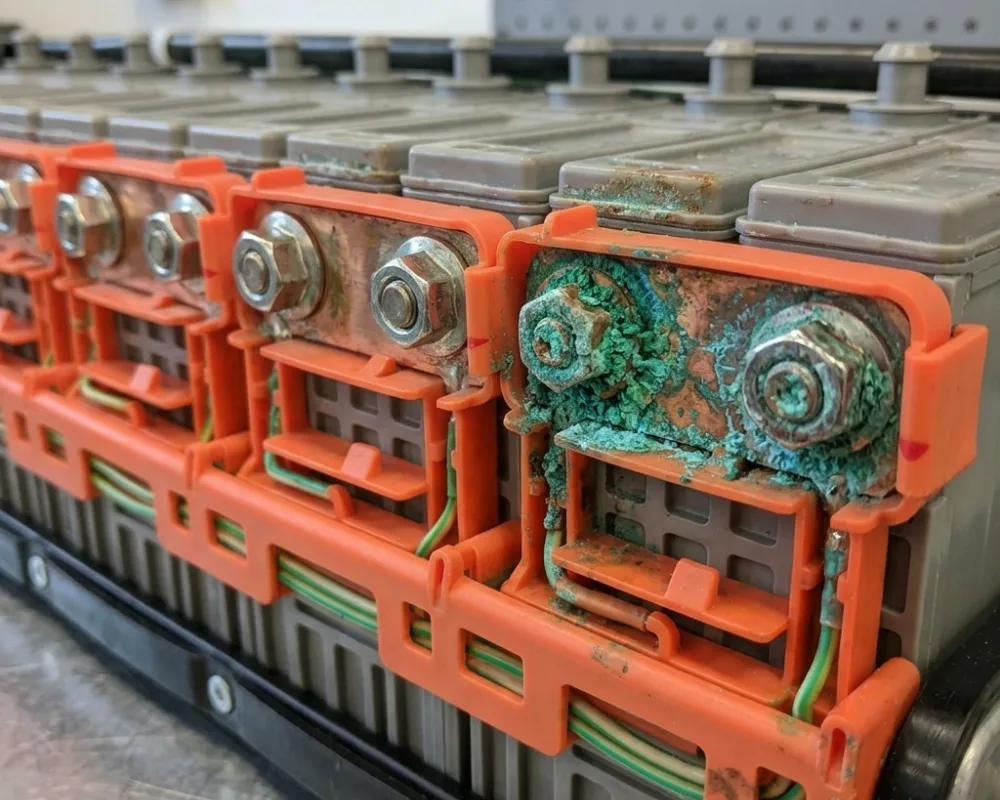
Copper conducts beautifully when it is clean. When it is covered in oxidation, corrosion, or fine debris from years of vibration and thermal cycling, it does not conduct as well. Resistance climbs. Some of the energy that should be reaching your motor turns into heat at the connection itself. The effects compound — heat speeds up corrosion, corrosion increases resistance, resistance creates more heat.
Cleaning interrupts that loop. It is one of the most undervalued pieces of hybrid maintenance there is.

What Cleaning Actually Does
Cleaning busbars and removing internal debris is not glamorous work. But the chain of effects it triggers reaches into nearly every measure of pack health that matters.
Busbars and terminals carry every amp the pack moves. When corrosion builds up, electrical resistance climbs — and resistance turns into heat instead of useful power. Cleaning brings the connections back toward their original conductivity.
Uneven resistance between modules means some cells work harder than others. Over time that imbalance accelerates wear on the hardest-working cells. A clean pack distributes the load more evenly across all of it.
Resistance generates heat. Heat is the enemy of any battery chemistry. Reducing connection-level resistance reduces internal heat — which is one of the levers that affects how long a hybrid pack lasts.
A pack that runs cooler, more balanced, and with less resistive loss is a pack working closer to the conditions it was designed for. None of this reverses age, but it helps hybrid batteries live the life they were built to live.
What this is not. Cleaning will not bring genuinely failed cells back from the dead. If the chemistry inside a module has degraded past a certain point, no amount of clean copper changes that. Cleaning addresses the connections — not the cells themselves. We will tell you honestly which one your pack actually needs.
When to Consider It
Busbar cleaning sits in the territory between maintenance and repair. Here is when it tends to make the most sense.
Hybrid systems usually do not fail suddenly — they fade. Reduced electric assist, less aggressive regenerative braking, or the system relying more on the gas engine than it used to can all point toward a pack that is not performing at its potential.
Warning lights that come on, go off, and come back again — sometimes after a hot day, sometimes after a hill — can indicate a pack that is borderline rather than failed. Connection issues sit in that borderline zone.
If a hybrid technician notes that your pack is running warm during diagnostic checks — or if cooling fans seem to run more aggressively than they used to — internal resistance is one of the things that can cause it.
Most original hybrid batteries past 150,000 miles will benefit from a busbar inspection at minimum. It is not always necessary to clean — but it is almost always worth checking. The pack will tell us what it needs.
When a diagnostic scan shows uneven voltage between modules, the cause might be a weak cell — but it might also be a clean cell sitting behind a corroded connection. Cleaning rules out the simpler explanation first.
If your hybrid battery has had module replacement, balancing, or other internal service, cleaning the busbars while the pack is open is a sensible add-on. The connections are already accessible.
Any of these sound familiar? Speak to a Specialist — we will help you decide whether cleaning is actually the right next step.
Our Process
Every busbar cleaning service follows the same disciplined arc — inspect, address, verify. No shortcuts on a pack that is going to spend years more in your vehicle.

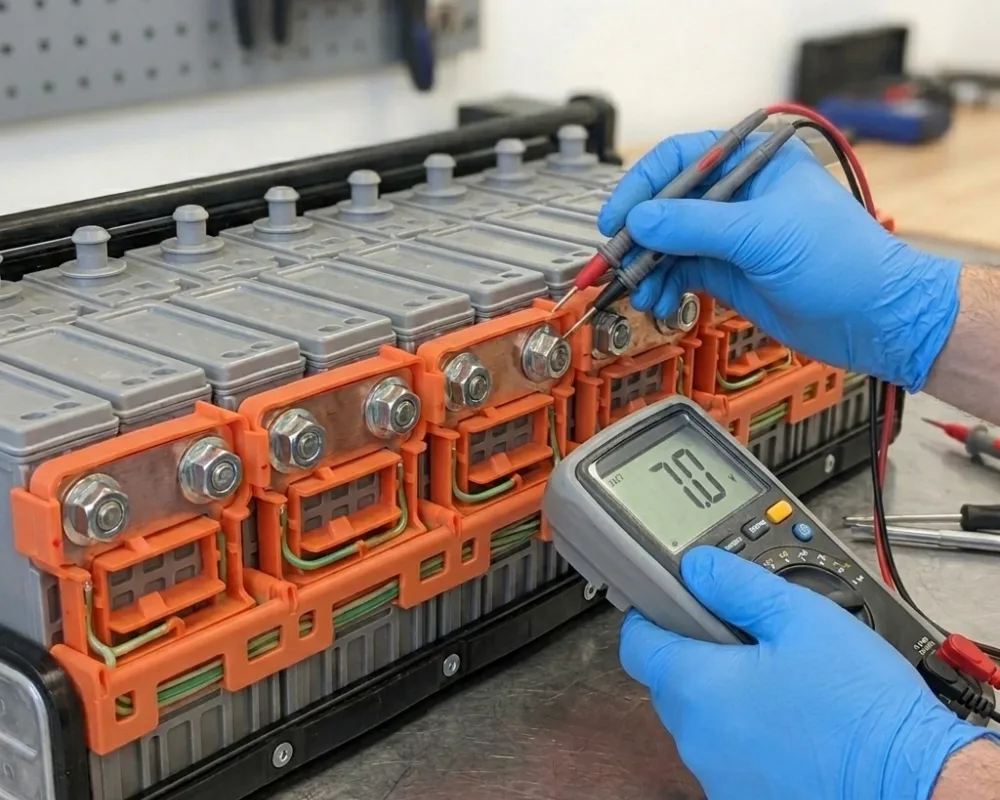
We start outside the pack — full hybrid system scan, fault code review, voltage and resistance readings across modules. The data tells us whether cleaning makes sense before we open anything up.
Service plug disconnected, pack safely powered down, and the housing opened in a controlled environment. Every step follows hybrid high-voltage safety protocol — this is where specialist training matters most.
Copper busbars and module terminals cleaned of corrosion and oxidation buildup. Acid residue, where present, is neutralized. Pack interior cleared of accumulated debris from years of operation.
Connections torqued back to specification — too loose increases resistance, too tight damages threads. Pack reinstalled, hybrid system rescanned, resistance and balance verified before the vehicle leaves.
A Word About DIY
Hybrid battery packs operate at hundreds of volts. The consequences of doing this wrong range from damaging the pack to causing personal injury. Plenty of YouTube videos make it look straightforward — they leave out the part where you actually need the right tools, training, and respect for what you are working with.
We do this work routinely, in a controlled environment, with proper safety equipment, and a warranty on what we do. That is the standard this kind of service deserves.
Common Questions
Where We Serve
Based in San Leandro — towing coordination available if your vehicle is not safe to drive in. Mobile diagnostic service across the Bay Area.
Don't see your city? Speak to a Specialist — we serve the wider Bay Area and can help arrange transport.
Inspection first. Honest read on whether cleaning is worth it. Specialist work, controlled environment, every connection verified. The pack you have already deserves the cleanest version of itself.