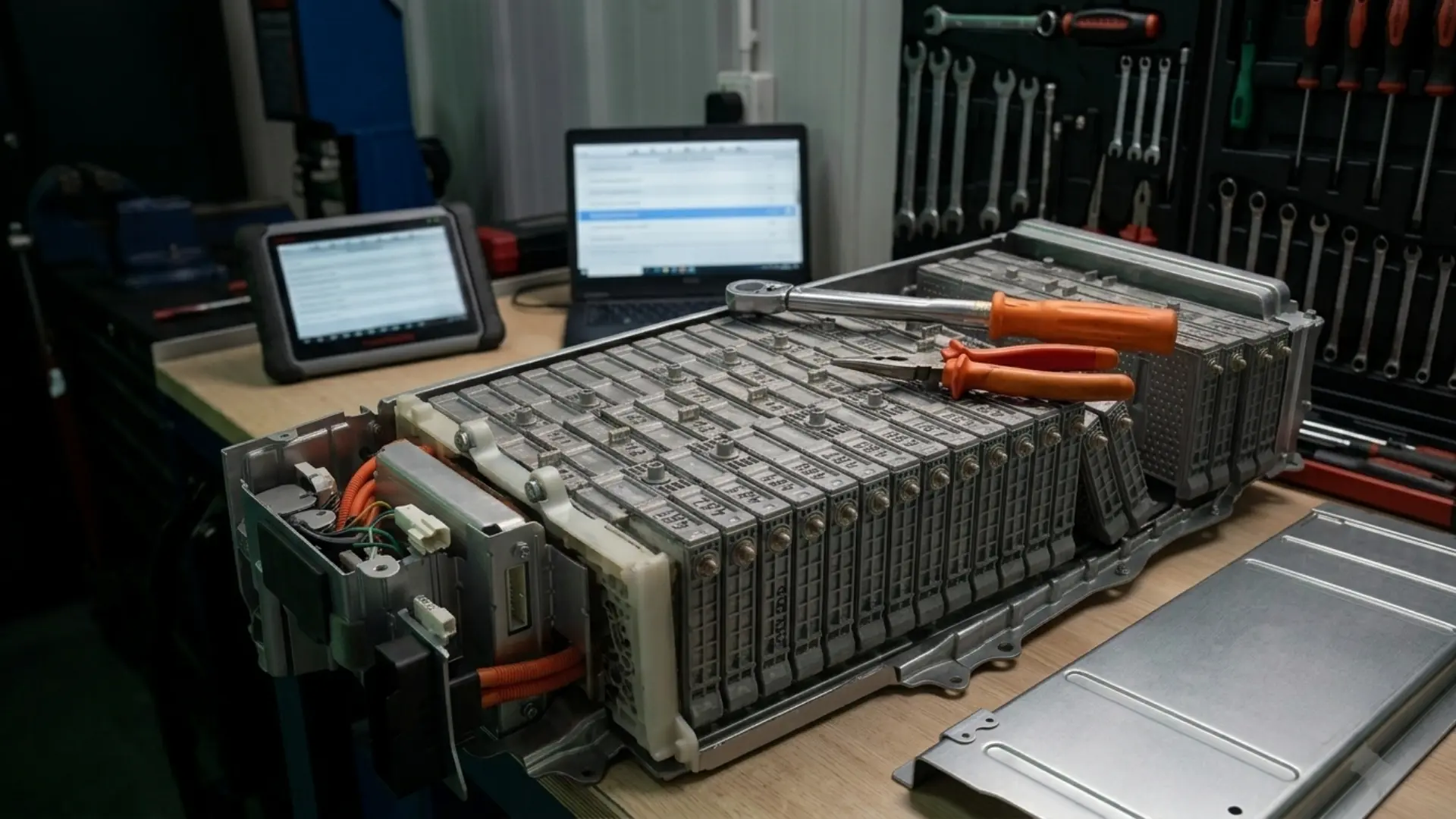
A used hybrid can be one of the best values on the road. It can also hand you a repair bill that erases the savings in a single afternoon.
The difference almost always comes down to one component. And unlike a bad transmission or a tired engine, a fading hybrid battery is very good at hiding. A pack can feel completely normal for a fifteen-minute test drive and still be months from a warning light.
Here's how to look past that — before money changes hands.
Start With Age and Mileage Together
Most buyers look at mileage. With a hybrid, you have to look at mileage *and* age, because the two tell different stories.
Hybrid batteries degrade with heat and time, not just use. A ten-year-old car with 60,000 miles isn't the bargain it appears to be — that pack has aged a decade regardless of how gently it was driven, and low mileage often means long stretches parked, which is genuinely hard on a hybrid battery.
An unusually low-mileage older hybrid isn't automatically a bad buy. But it deserves more scrutiny, not less.
Check the Warranty Status by VIN
Before anything else, find out whether the car still has coverage. Toyota's hybrid battery warranty runs up to ten years or 150,000 miles on recent models, with separate coverage on other hybrid components — and other manufacturers have their own terms.
Any dealer can check this by VIN in a minute. A car with two years of battery coverage remaining is a meaningfully different purchase from an identical car with none. It's the cheapest piece of information in this entire process and most buyers skip it.
Look at the Cooling Vent
This is the check almost nobody does, and it tells you a lot about how the car was treated.
Most hybrid packs breathe through a vent, usually near the rear seat or in the trunk area. Find it and look at it. Is it packed with dust? Blocked by cargo? Full of pet hair? Has it clearly never been cleaned?
A blocked vent means the pack has been running hotter than it should for however long that's been true. Heat is the primary thing that kills hybrid batteries, so a filthy vent is a real signal — not about the vent itself, which is cleanable, but about the years of thermal stress behind it.
Cargo stacked against the vent is the most common cause, and the owner usually has no idea it matters.
What to Watch on the Test Drive
The energy display is your best free diagnostic tool. Drive long enough to actually see it work — twenty minutes minimum, ideally with a mix of stop-and-go and highway.
Watch how the charge level moves. A healthy pack cycles smoothly through the middle of its range. A failing one swings — climbing to nearly full, then dropping steeply under light load, sometimes several bars in a short distance. That erratic, rapid swing is one of the clearest signs of a pack that's out of balance.
Notice when the gas engine runs. It should shut off at stoplights and during gentle low-speed driving once the car is warmed up. If the engine runs constantly, even warm and even coasting, the system may be compensating for a pack that can't hold usable charge.
Feel the acceleration. Weak or inconsistent power under moderate throttle, especially merging or climbing, can point to a pack that isn't delivering.
Try to drive it cold. This matters more than most people realize. Ask the seller not to warm the car up before you arrive. A weak pack often behaves noticeably worse on a cold start, and a seller who has already run the car for twenty minutes — intentionally or not — has smoothed over exactly the symptom you're trying to catch.
Ask Directly Whether the Battery Was Replaced
Ask, and then ask for documentation.
The answer matters either way. A pack replaced two years ago by a reputable shop, with paperwork and remaining warranty, is a genuine plus. A pack replaced with an unknown salvage unit and no records is a question mark. And "I don't know" from a long-term owner usually means it's original.
If it was replaced, the follow-ups are: by whom, what kind of pack, and is any warranty transferable? Some aftermarket warranties transfer to a new owner and some don't. That's worth knowing before you negotiate.
Don't Confuse the 12V With the Hybrid Battery
Hybrids have two batteries, and buyers mix them up constantly.
The small 12V battery starts the car's systems and runs the electronics. When it's weak you get slow startups, odd dashboard behavior, and sometimes warning lights that look alarming. It's an inexpensive, routine replacement.
The high-voltage hybrid pack is the expensive one. A seller may genuinely believe the car "just needs a battery" when it needs the expensive kind — or, occasionally, the reverse, where a scary-looking fault is really just a dying 12V and the car is fine. Don't assume either way based on symptoms alone.
Take the Warning Lights Seriously — But Not at Face Value
If a warning light is on, don't accept "it's nothing" as an answer. Equally, don't assume the worst.
On a Prius, the red triangle is a general master warning — it means a computer has flagged something, not specifically that the battery has failed. It's triggered by everything from low oil to a failing inverter coolant pump to genuine battery trouble. Those are very different repairs at very different costs.
The point is that a warning light on a car you're considering is a reason to get a real diagnostic, not a reason to walk away or to shrug.
The Twenty-Minute Version
If you only have time for the basics:
- Check warranty status by VIN before you go
- Look at the cooling vent
- Drive it cold, for at least twenty minutes
- Watch the charge level for erratic swings
- Note whether the gas engine ever shuts off
- Ask for battery replacement records
- Don't dismiss any warning light
When to Get It Professionally Checked
Every check above is worth doing, and none of them replace a real diagnostic.
A hybrid-specific pre-purchase inspection reads the individual module voltages, tests how the pack performs under load, and pulls stored codes the dashboard never showed you. It's the difference between "the battery seemed okay on the drive" and knowing which cells are weak and how far along the degradation actually is.
Relative to what a hybrid battery replacement costs, a pre-purchase diagnostic is inexpensive. It either confirms you found a good car, or it saves you from a very expensive one — and it gives you something concrete to negotiate with either way.
Used hybrids are still a smart buy. The people who get burned are almost never the ones who checked. If you're looking at a car and want to know what you're actually getting, have it looked at before you sign anything.
Hybrid Battery Trouble?
Get an honest diagnosis from a Dr. Prius Certified specialist. Same-day service available, warranty on every job, mobile service across the Bay Area.